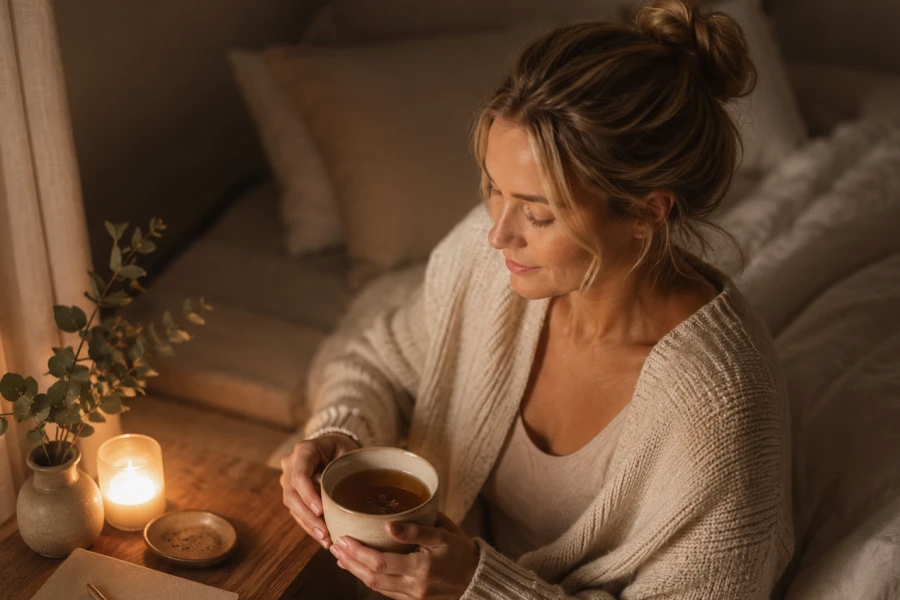
Calm routines for anxiety can turn the end of the day into a safer landing. Evenings often carry everything you held together earlier. Work worries return. Family responsibilities pile up. Your body feels tired, yet your mind keeps moving. A gentle routine helps separate today from tomorrow. It gives your nervous system familiar signals of rest. You do not need a perfect wellness ritual. You need steps that feel comforting enough to repeat. Small evening choices can reduce mental noise. Over time, they make calm feel easier to access.
Your body needs to know the day is ending. Change clothes after work if possible. Wash your face. Put your bag away. Clear one small surface. Start a playlist without lyrics if sound helps. A calm lifestyle habits approach uses ordinary cues. These cues tell your mind to shift gears. The transition does not need to be long. It just needs to be recognizable.
Anxiety can rise when the environment stays busy. Bright lights may feel harsh at night. Loud videos can keep the body alert. Clutter can make responsibilities feel unfinished. Lower one kind of stimulation first. Dim a lamp. Silence unnecessary alerts. Move visual mess into a basket. Try stress relief practices that change the room gently. Your surroundings influence your thoughts. Softer spaces make softer evenings more likely.
Breathing routines work best when they feel simple. Try inhaling for four counts. Exhale for six counts. Repeat this cycle several times. Let your shoulders drop with each exhale. Place one hand on your chest if that feels grounding. Skip any technique that creates pressure. Mindful breathing exercises should support, not challenge you. A few minutes can reset the evening. Your body receives a calmer message.
Evening worries often repeat because they have nowhere to go. Keep a notebook nearby. Write unfinished tasks in plain language. Add the next action when you know it. Mark anything that can wait. Close the notebook when you finish. This ritual gives anxiety a boundary. An emotional reset plan can be very practical. You are not ignoring problems. You are giving them a time and place.
Bedtime becomes easier when it is predictable. Start winding down before exhaustion hits. Keep the last thirty minutes simple. Choose stretching, reading, skincare, or quiet music. Avoid intense conversations when possible. Put tomorrow’s essentials somewhere visible. A peaceful evening routine reduces last-minute searching. Your mind gets fewer reasons to react. Sleep may not arrive instantly. Still, your body learns the pattern.
Anxiety can sit in the body. Your jaw tightens. Your hands clench. Your neck feels loaded. Gentle movement helps discharge that tension. Try slow stretching near the bed. Walk through your home for five minutes. Shake out your arms. Use grounding techniques while moving slowly. Notice contact with the floor. Movement makes calm physical. That can feel more convincing than thoughts alone.
Difficult conversations can echo for hours. Give yourself recovery time before analyzing everything. Drink water. Step into another room. Name what emotion is strongest. Avoid replaying every sentence immediately. Write one honest line about what you need next. Anxiety support tools work best when they meet the real moment. Some nights need silence. Others need connection. Let your routine respond flexibly.
A routine that takes too long becomes fragile. Choose three anchors. Use one environmental cue. Add one body-based practice. Finish with one closing action. Keep the full routine under twenty minutes if evenings are busy. Consistency matters more than length. A stress management routine should feel possible on tired nights. That makes it trustworthy. Calm grows when practice feels available.




Leave a comment